The CULTIVATE Reading List
By popular request, here are some of the books I highly recommend checking out.
Please note: these are Amazon affiliate links, and I will receive a small commission from your purchase of these products.
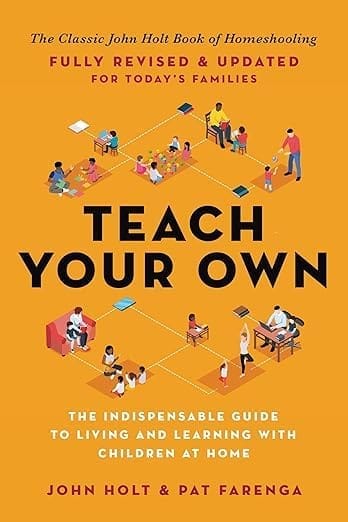
The classic guide to teaching children at home for a new generation of homeschooling parents.
In 2019, there were more than two million children being homeschooled. That number doubled during the pandemic and is now likely to continue increasing as more parents worry that school might not be the best place for their children to learn and grow.
Teach Your Own helped launch the homeschooling movement; now, its timeless and revolutionary message of recognizing the ways children come to understand the world has been updated for today’s environment.
John Holt's warm understanding of children and his passionate belief in every child's ability to learn have made this book an essential resource for over forty years to homeschooling families.
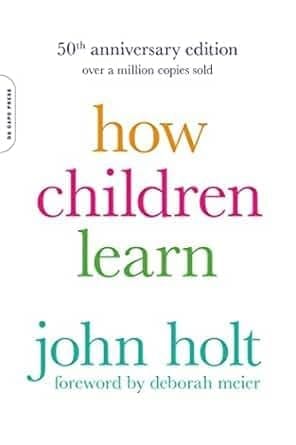
This enduring classic of educational thought offers teachers and parents deep, original insight into the nature of early learning. John Holt was the first to make clear that, for small children, "learning is as natural as breathing." In this delightful yet profound book, he looks at how we learn to talk, to read, to count, and to reason, and how we can nurture and encourage these natural abilities in our children.
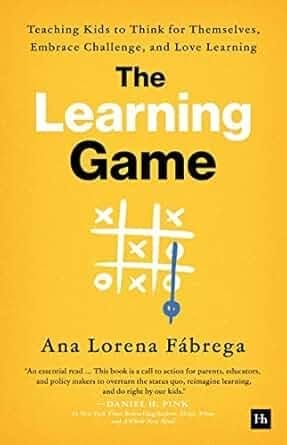
How did we conclude that the best way to prepare kids for the future is to cluster them into classrooms by age and grade, forcing them to learn the same things, at the same time and pace, seven hours a day, five days a week, for twelve years?
We trust the school system to prepare our kids for the future. We get excited when they get good grades, or disappointed if they don’t. But we rarely stop to question whether school is teaching our children the right things in the right way.
Kids could get good at playing the game of school, but are they really learning?
Teacher-turned-edupreneur Ana Lorena Fábrega, known by her students as Ms. Fab, invites us to rethink education.
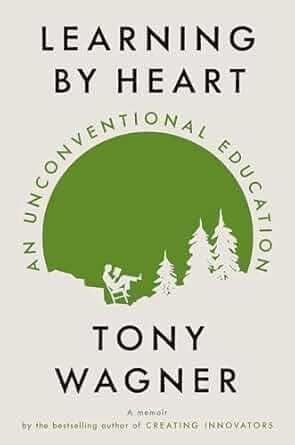
Tony Wagner is an eminent education specialist: he has taught at every grade level from high school through graduate school; worked at Harvard; done significant work for the Bill & Melinda Gates Foundation; and speaks across the country and all over the world. But before he found his success, Wagner was kicked out of middle school, expelled from high school, and dropped out of two colleges. Learning by Heart is his powerful account of his years as a student and teacher.
After struggling in both roles, he learned to create meaningful learning experiences despite the constraints of conventional schooling--initially for himself and then for his students--based on understanding each student's real interests and strengthening his or her intrinsic motivations. Wagner's story sheds light on critical issues facing parents and educators today, and reminds us that trial and error, resilience, and respect for the individual, are at the very heart of all teaching and learning.
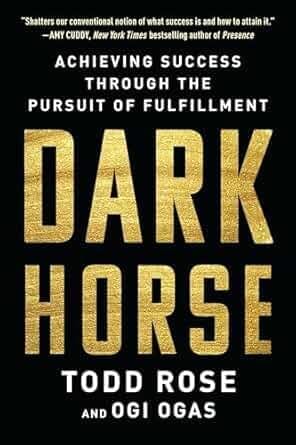
For generations, we've been stuck with a cookie-cutter mold for success that requires us to be the same as everyone else, only better. This "standard formula" works for some people but leaves most of us feeling disengaged and frustrated. As much as we might dislike the standard formula, it seems like there's no other practical path to financial security and a fulfilling life. But what if there is?
In the Dark Horse Project at the Harvard Graduate School of Education, bestselling author and acclaimed thought leader Todd Rose and neuroscientist Ogi Ogas studied women and men who achieved impressive success even though nobody saw them coming. Dark horses blaze their own trail to a life of happiness and prosperity. Yet what is so remarkable is that hidden inside their seemingly one-of-a-kind journeys are practical principles for achieving success that work for anyone, no matter who you are or what you hope to achieve. This mold-breaking approach doesn't depend on you SAT scores, who you know, or how much money you have. The secret is a mindset that can be expressed in plain English: Harness your individuality in the pursuit of fulfillment to achieve excellence.
In Dark Horse, Rose and Ogas show how the four elements of the dark horse mindset empower you to consistently make the right choices that fit your unique interests, abilities, and circumstances and will guide you to a life of passion, purpose, and achievement.
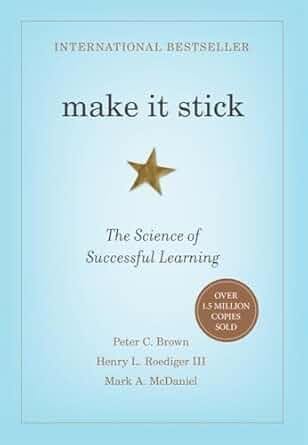
Are you tired of forgetting what you learn? This groundbreaking book, based on the latest research in cognitive science, offers powerful strategies to boost memory and learning.
To most of us, learning something “the hard way” means wasted time and effort. Good teaching, many believe, should be tailored to the different learning styles of students and should use strategies that make learning easier. Make It Stick turns fashionable ideas like these on their head. Drawing on recent discoveries in cognitive psychology and a ten-year collaboration among some of the world’s leading experts on human learning and memory, the authors explain what really drives successful learning. With clear, real-world examples, they show how we can confidently hone our skills and learn more effectively.
Many common study habits simply don’t work. Underlining, highlighting, rereading, cramming, and single-minded repetition of new skills create the illusion of mastery, but gains fade quickly. Science shows that more durable learning comes from self-testing, introducing certain difficulties in practice, waiting to re-study new material until a little forgetting has occurred, and interleaving the practice of one skill or topic with another. Make It Stick breaks down these proven approaches in compelling ways and offers concrete techniques for becoming more productive learners.
Full of eye-opening and inspiring stories for students, educators, and parents, Make It Stick is an indispensable guide for all those interested in the challenge of lifelong learning and self-improvement.
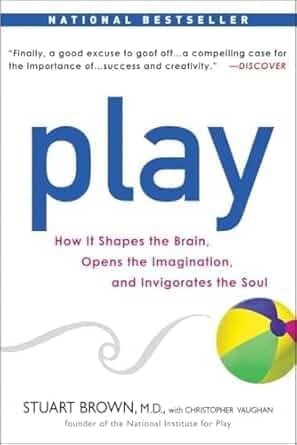
From a leading expert, a groundbreaking book on the science of play, and its essential role in fueling our happiness and intelligence throughout our lives
We've all seen the happiness on the face of a child while playing in the school yard. Or the blissful abandon of a golden retriever racing across a lawn. This is the joy of play. By definition, play is purposeless, all-consuming, and fun. But as Dr. Stuart Brown illustrates, play is anything but trivial. It is a biological drive as integral to our health as sleep or nutrition. We are designed by nature to flourish through play.
Dr. Brown has spent his career studying animal behavior and conducting more than six-thousand "play histories" of humans from all walks of life-from serial murderers to Nobel Prize winners. Backed by the latest research, Play explains why play is essential to our social skills, adaptability, intelligence, creativity, ability to problem solve and more. Particularly in tough times, we need to play more than ever, as it's the very means by which we prepare for the unexpected, search out new solutions, and remain optimistic. A fascinating blend of cutting-edge neuroscience, biology, psychology, social science, and inspiring human stories of the transformative power of play, this book proves why play just might be the most important work we can ever do.
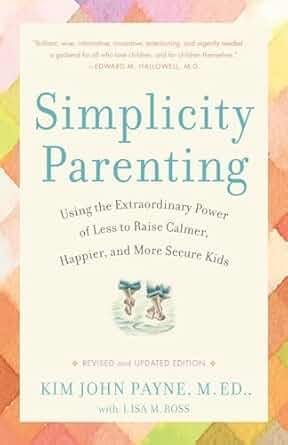
Today’s busier, faster society is waging an undeclared war on childhood. With too much stuff, too many choices, and too little time, children can become anxious, have trouble with friends and school, or even be diagnosed with behavioral problems. Internationally renowned family consultant Kim John Payne helps parents reclaim for their children the space and freedom that all kids need for their attention to deepen and their individuality to flourish. Accessible and thoughtful, Simplicity Parenting offers inspiration, ideas, and a blueprint for change.
A manifesto for protecting the grace of childhood, Simplicity Parenting is an eloquent guide to bringing new rhythms to bear on the lifelong art of raising children.
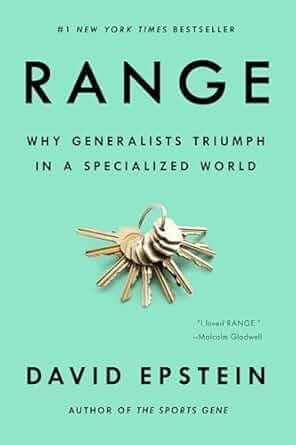
Plenty of experts argue that anyone who wants to develop a skill, play an instrument, or lead their field should start early, focus intensely, and rack up as many hours of deliberate practice as possible. If you dabble or delay, you’ll never catch up to the people who got a head start. But a closer look at research on the world’s top performers, from professional athletes to Nobel laureates, shows that early specialization is the exception, not the rule.
David Epstein examined the world’s most successful athletes, artists, musicians, inventors, forecasters and scientists. He discovered that in most fields—especially those that are complex and unpredictable—generalists, not specialists, are primed to excel. Generalists often find their path late, and they juggle many interests rather than focusing on one. They’re also more creative, more agile, and able to make connections their more specialized peers can’t see.
Provocative, rigorous, and engrossing, Range makes a compelling case for actively cultivating inefficiency. Failing a test is the best way to learn. Frequent quitters end up with the most fulfilling careers. The most impactful inventors cross domains rather than deepening their knowledge in a single area. As experts silo themselves further while computers master more of the skills once reserved for highly focused humans, people who think broadly and embrace diverse experiences and perspectives will increasingly thrive.
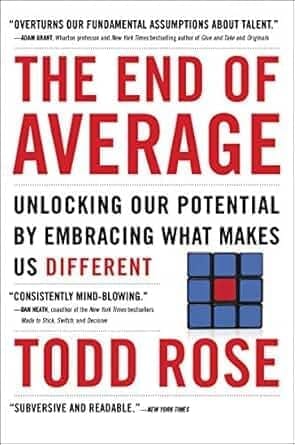
Are you above average? Is your child an A student? Is your employee an introvert or an extrovert?
Every day we are measured against the yardstick of averages, judged according to how closely we come to it or how far we deviate from it.
The assumption that metrics comparing us to an average—like GPAs, personality test results, and performance review ratings—reveal something meaningful about our potential is so ingrained in our consciousness that we don’t even question it. That assumption, says Harvard’s Todd Rose, is spectacularly—and scientifically—wrong.
In The End of Average, Rose, a rising star in the new field of the science of the individual shows that no one is average. Not you. Not your kids. Not your employees. This isn’t hollow sloganeering—it’s a mathematical fact with enormous practical consequences. But while we know people learn and develop in distinctive ways, these unique patterns of behaviors are lost in our schools and businesses which have been designed around the mythical “average person.” This average-size-fits-all model ignores our differences and fails at recognizing talent. It’s time to change it.
Weaving science, history, and his personal experiences as a high school dropout, Rose offers a powerful alternative to understanding individuals through averages: the three principles of individuality. The jaggedness principle (talent is always jagged), the context principle (traits are a myth), and the pathways principle (we all walk the road less traveled) help us understand our true uniqueness—and that of others—and how to take full advantage of individuality to gain an edge in life.
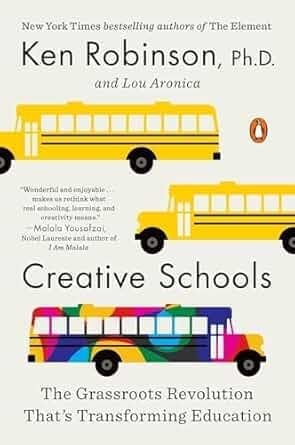
Ken Robinson is one of the world’s most influential voices in education, and his 2006 TED Talk on the subject is the most viewed in the organization’s history. Now, the internationally recognized leader on creativity and human potential focuses on one of the most critical issues of our time: how to transform the nation’s troubled educational system. At a time when standardized testing businesses are raking in huge profits, when many schools are struggling, and students and educators everywhere are suffering under the strain, Robinson points the way forward. He argues for an end to our outmoded industrial educational system and proposes a highly personalized, organic approach that draws on today’s unprecedented technological and professional resources to engage all students, develop their love of learning, and enable them to face the real challenges of the twenty-first century. Filled with anecdotes, observations and recommendations from professionals on the front line of transformative education, case histories, and groundbreaking research—and written with Robinson’s trademark wit and engaging style—Creative Schools will inspire teachers, parents, and policy makers alike to rethink the real nature and purpose of education.
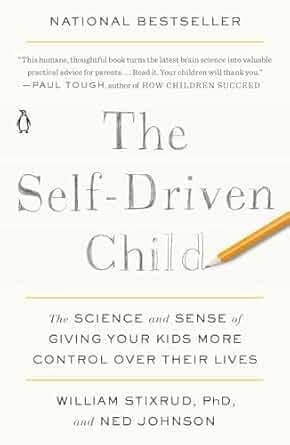
A few years ago, Bill Stixrud and Ned Johnson started noticing the same problem from different angles: Even high-performing kids were coming to them acutely stressed and lacking motivation. Many complained they had no control over their lives. Some stumbled in high school or hit college and unraveled. Bill is a clinical neuropsychologist who helps kids gripped by anxiety or struggling to learn. Ned is a motivational coach who runs an elite tutoring service. Together they discovered that the best antidote to stress is to give kids more of a sense of control over their lives. But this doesn't mean giving up your authority as a parent. In this groundbreaking book they reveal how you can actively help your child to sculpt a brain that is resilient, and ready to take on new challenges.
From the authors of Seven Principles for Raising a Self-Driven Child and What Do You Say, The Self-Driven Child offers a combination of cutting-edge brain science, the latest discoveries in behavioral therapy, and case studies drawn from the thousands of kids and teens Bill and Ned have helped over the years to teach you how to set your child on the real road to success. As parents, we can only drive our kids so far. At some point, they will have to take the wheel and map out their own path. But there is a lot you can do before then to help them tackle the road ahead with resilience and imagination.
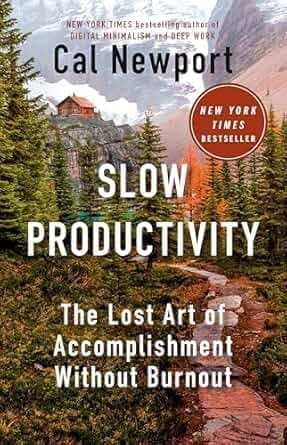
Our current definition of “productivity” is broken. It pushes us to treat busyness as a proxy for useful effort, leading to impossibly lengthy task lists and ceaseless meetings. We’re overwhelmed by all we have to do and on the edge of burnout, left to decide between giving into soul-sapping hustle culture or rejecting ambition altogether. But are these really our only choices?
Long before the arrival of pinging inboxes and clogged schedules, history’s most creative and impactful philosophers, scientists, artists, and writers mastered the art of producing valuable work with staying power. In this timely and provocative book, Cal Newport harnesses the wisdom of these traditional knowledge workers to radically transform our modern jobs. Drawing from deep research on the habits and mindsets of a varied cast of storied thinkers – from Galileo and Isaac Newton, to Jane Austen and Georgia O’Keefe – Newport lays out the key principles of “slow productivity,” a more sustainable alternative to the aimless overwhelm that defines our current moment. Combining cultural criticism with systematic pragmatism, Newport deconstructs the absurdities inherent in standard notions of productivity, and then provides step-by-step advice for cultivating a slower, more humane alternative.
From the aggressive rethinking of workload management, to introducing seasonal variation, to shifting your performance toward long-term quality, Slow Productivity provides a roadmap for escaping overload and arriving instead at a more timeless approach to pursuing meaningful accomplishment. The world of work is due for a new revolution. Slow productivity is exactly what we need.
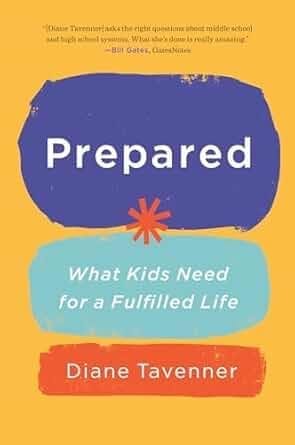
In 2003, Diane Tavenner cofounded the first school in what would soon become one of America’s most innovative public-school networks. Summit Public Schools has since won national recognition for its exceptional outcomes: Ninety-nine percent of students are accepted to a four-year college, and they graduate from college at twice the national average.
But in a radical departure from the environments created by the college admissions arms race, Summit students aren’t focused on competing with their classmates for rankings or test scores. Instead, students spend their days solving real-world problems and developing the skills of self-direction, collaboration, and reflection, all of which prepare them to succeed in college, thrive in today’s workplace, and lead a secure and fulfilled life.
Through personal stories and hard-earned lessons from Summit’s exceptional team of educators and diverse students, Tavenner shares the learning philosophies underlying the Summit model and offers a blueprint for any parent who wants to stop worrying about their children’s future—and start helping them prepare for it.
At a time when many students are struggling to regain educational and developmental ground lost to the disruptions of the pandemic, Prepared is more urgent and necessary than ever.
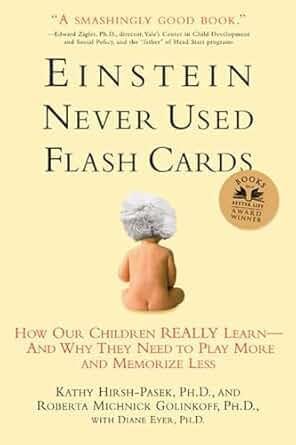
In Einstein Never Used Flash Cards, highly credentialed child psychologists, Kathy Hirsh-Pasek, Ph.D., and Roberta Michnick Golinkoff, Ph.D., with Diane Eyer, Ph.D., offer a compelling indictment of the growing trend toward accelerated learning and the cult of achievement that pressures parents to help their children to get ahead. It’s a message that stressed-out parents are craving to hear: Letting tots learn through unstructured play is not only okay—it’s a better way for children to learn than drilling academics.
Drawing on overwhelming scientific evidence from their own studies and the collective research results of child development experts, Kathy, Roberta, and Diane explain the process of learning from a child’s point of view, addressing how play helps boost learning in key areas of development such as math, reading, verbal communication, science, self-awareness, and social skills. To help parents foster creative play, they offer forty age-appropriate games. These simple, fun—yet powerful—exercises work as well or better than expensive enrichment programs and high-tech educational toys to teach children what their ever-active, curious minds are excited to learn.
Packed with insights from fascinating studies and thoughtful advice, Einstein Never Used Flash Cards reassures and empowers parents with knowledge that helps their children grow and thrive.
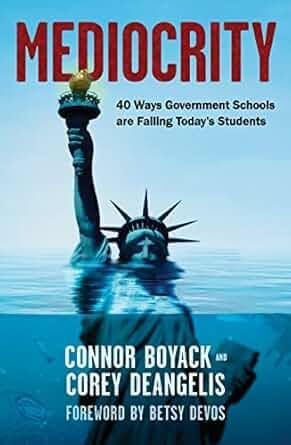
In 1983, the National Commission on Excellence in Education warned, “The educational foundations of our society are presently being eroded by a rising tide of mediocrity that threatens our very future as a nation and a people.”
Forty years later, are things better or worse? This book shares forty examples of how poorly today’s government schools are doing to show that the “rising tide of mediocrity” has created a tsunami of low expectations and poor performance, suggesting the need for alternative solutions.
Writing to Learn is a book on how to write clearly about any subject--from mathematics, physics and chemistry to art and music--and how to use writing as a means of learning. it is an engaging personal journey, written with warmth and humor, as Zinsser takes the reader into many surprising corners of knowledge and demonstrates that every field has an accessible literature.
Essentialism isn’t about getting more done in less time. It’s about getting only the right things done.
Have you ever found yourself stretched too thin?
Are you often busy but not productive?
Do you feel like your time is constantly being hijacked?
If you answered yes to any of these, the way out is the Way of the Essentialist.
Essentialism is more than a time-management technique. It is a systematic discipline for discerning what is absolutely essential, then eliminating everything that is not, so we can make the highest possible contribution toward the things that really matter.
By forcing us to apply more selective criteria for where to spend our precious time and energy, the disciplined pursuit of less empowers us to reclaim control of our own choices, instead of giving others the implicit permission to choose for us.
Essentialism is not one more thing to do. It’s a whole new way of doing less, but better, in every area of our lives. Join the millions of people who have used Essentialism to change their outlook on the world.
Here's the hard truth: the modern education system is a disaster.
Why do parents subject their children to a process that disregards their interests, ignores their basic humanity, and subjects them to arbitrary mandates and micro-management? Your children deserve better than to be bored learning about subjects they aren’t interested in and frustrated with endless busywork.
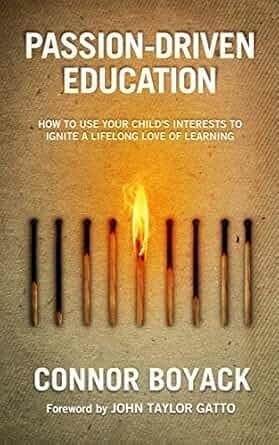
There is a better way—one that ensures your child sees learning as a joy and provides you, the parent, with a much less stressful way to educate and empower your son or daughter. In this book, Connor Boyack shares the exciting philosophy and empowering day-to-day steps involved in passion-driven education.
A child’s curiosity and natural desire to learn are like a tiny flame, easily extinguished unless it’s protected and given fuel. This book will help you as a parent both protect that flame of curiosity and supply it with the fuel necessary to make it burn bright throughout your child’s life. Let’s ignite our children’s natural love of learning!
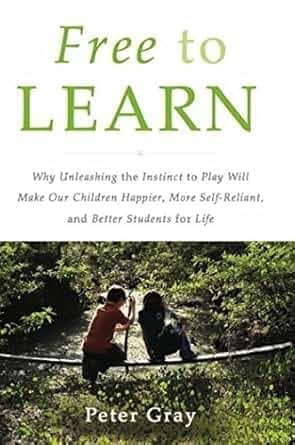
In Free to Learn, developmental psychologist Peter Gray argues that in order to foster children who will thrive in today's constantly changing world, we must entrust them to steer their own learning and development. Drawing on evidence from anthropology, psychology, and history, he demonstrates that free play is the primary means by which children learn to control their lives, solve problems, get along with peers, and become emotionally resilient. A brave, counterintuitive proposal for freeing our children from the shackles of the curiosity-killing institution we call school, Free to Learn suggests that it's time to stop asking what's wrong with our children, and start asking what's wrong with the system. It shows how we can act—both as parents and as members of society—to improve children's lives and to promote their happiness and learning.
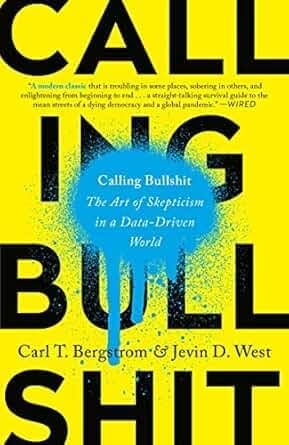
Misinformation, disinformation, and fake news abound and it’s increasingly difficult to know what’s true. Our media environment has become hyperpartisan. Science is conducted by press release. Startup culture elevates bullshit to high art. We are fairly well equipped to spot the sort of old-school bullshit that is based in fancy rhetoric and weasel words, but most of us don’t feel qualified to challenge the avalanche of new-school bullshit presented in the language of math, science, or statistics. In Calling Bullshit, Professors Carl Bergstrom and Jevin West give us a set of powerful tools to cut through the most intimidating data.
You don’t need a lot of technical expertise to call out problems with data. Are the numbers or results too good or too dramatic to be true? Is the claim comparing like with like? Is it confirming your personal bias? Drawing on a deep well of expertise in statistics and computational biology, Bergstrom and West exuberantly unpack examples of selection bias and muddled data visualization, distinguish between correlation and causation, and examine the susceptibility of science to modern bullshit.
We have always needed people who call bullshit when necessary, whether within a circle of friends, a community of scholars, or the citizenry of a nation. Now that bullshit has evolved, we need to relearn the art of skepticism.
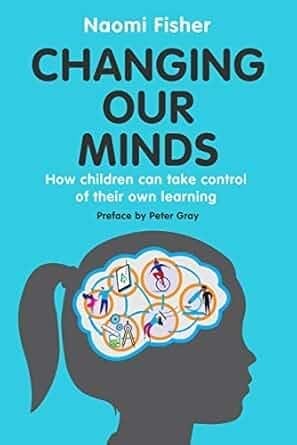
Children are born full of curiosity, eager to participate in the world. They learn as they live, with enthusiasm and joy. Then we send them to school. We stop them from playing and actively exploring their interests, telling them it's more important to sit still and listen. The result is that for many children, their motivation to learn drops dramatically. The joy of the early years is replaced with apathy and anxiety.
This is not inevitable. We are socialised to believe that schooling is synonymous with education, but it's only one approach. Self-directed education puts the child back in control of their learning. This enables children, including those diagnosed with special educational needs, to flourish in their own time and on their own terms. It enables us to put wellbeing at the centre of education.
Changing Our Minds brings together research, theory and practice on learning. It includes interviews with influential thinkers in the field of self-directed education and examples from families alongside practical advice. This essential guide will give you an understanding of why self-directed education makes sense, how it works, and what to do to put it into action yourself.
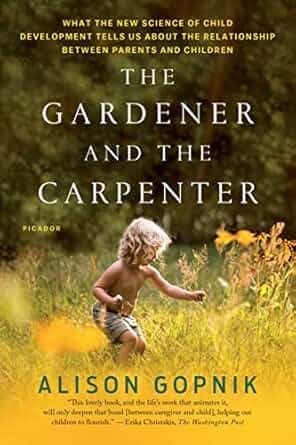
In The Gardener and the Carpenter, Alison Gopnik, one of the world's leading child psychologists, illuminates the paradoxes of parenthood from a scientific perspective and shatters the myth of "good parenting".
Caring deeply about our children is part of what makes us human. Yet the thing we call “parenting” is a surprisingly new invention. In the past thirty years, the concept of parenting and the multibillion-dollar industry surrounding it have transformed child care into obsessive, controlling, and goal-oriented labor intended to create a particular kind of child and therefore a particular kind of adult.
In The Gardener and the Carpenter, the pioneering developmental psychologist and philosopher Alison Gopnik argues that the familiar twenty-first-century picture of parents and children is profoundly wrong―it’s not just based on bad science, it’s bad for kids and parents, too.
Drawing on the study of human evolution and her own cutting-edge scientific research into how children learn, Gopnik shows that although caring for children is profoundly important, it is not a matter of shaping them to turn out a particular way. Children are designed to be messy and unpredictable, playful and imaginative―and to be very different both from their parents and from each other.
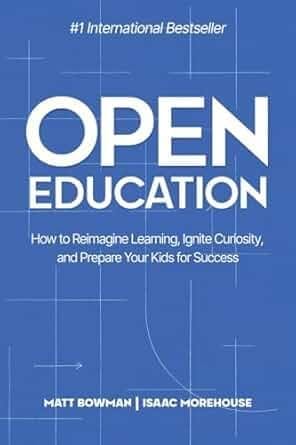
The World Has Changed. Education Is Opening Up.
No more being stuck in a box.
No more choosing between rigid options.
No more forcing square pegs into round holes.
For the first time in history, every approach to learning—from hands-on apprenticeships to innovative classrooms, from creative exploration to rigorous academics—is becoming available to every family.
Drawing from their work with over 100,000 students, education pioneers Matt Bowman and Isaac Morehouse show how to navigate this new world of possibilities. They reveal practical ways to craft an education that works with your child's natural curiosity and talents rather than against them. This is your roadmap for turning the overwhelming array of options into a personalized learning journey that actually works.
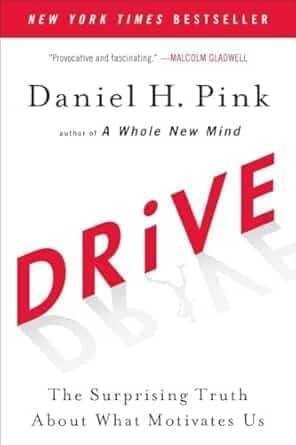
Most people believe that the best way to motivate is with rewards like money—the carrot-and-stick approach. That's a mistake, says Daniel H. Pink (author of To Sell Is Human: The Surprising Truth About Motivating Others). In this provocative and persuasive new book, he asserts that the secret to high performance and satisfaction-at work, at school, and at home—is the deeply human need to direct our own lives, to learn and create new things, and to do better by ourselves and our world.
Drawing on four decades of scientific research on human motivation, Pink exposes the mismatch between what science knows and what business does—and how that affects every aspect of life. He examines the three elements of true motivation—autonomy, mastery, and purpose-and offers smart and surprising techniques for putting these into action in a unique book that will change how we think and transform how we live.
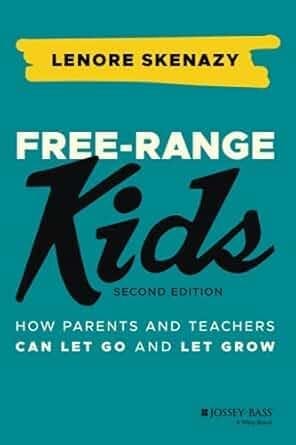
Learn to raise independent, can-do kids with a new edition of the book that started a movement.
In the newly revised and expanded Second Edition of Free-Range Kids, New York columnist-turned-movement leader Lenore Skenazy delivers a compelling and entertaining look at how we got so worried about everything our kids do, see, eat, read, wear, watch and lick -- and how to bid a whole lot of that anxiety goodbye. With real-world examples, advice, and a gimlet-eyed look at the way our culture forces fear down our throats, Skenazy describes how parents and educators can step back so kids step up. Positive change is faster, easier and a lot more fun than you’d believe. This is the book that has helped millions of American parents feel brave and optimistic again – and the same goes for their kids.
Perfect for parents and guardians of children of all ages, Free-Range Kids will also earn a place in the libraries of K-12 educators who want their students to blossom with newfound confidence and cheer.
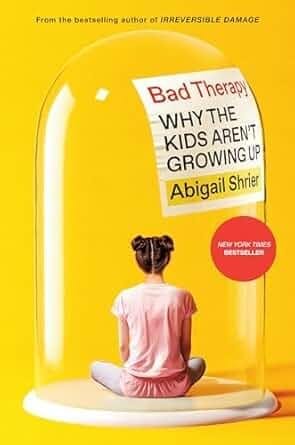
From the author of Irreversible Damage, an investigation into a mental health industry that is harming, not healing, American children
In virtually every way that can be measured, Gen Z’s mental health is worse than that of previous generations. Youth suicide rates are climbing, antidepressant prescriptions for children are common, and the proliferation of mental health diagnoses has not helped the staggering number of kids who are lonely, lost, sad and fearful of growing up. What’s gone wrong with America’s youth?
In Bad Therapy, bestselling investigative journalist Abigail Shrier argues that the problem isn’t the kids—it’s the mental health experts. Drawing on hundreds of interviews with child psychologists, parents, teachers, and young people, Shrier explores the ways the mental health industry has transformed the way we teach, treat, discipline, and even talk to our kids. She reveals that most of the therapeutic approaches have serious side effects and few proven benefits. Among her unsettling findings:
Talk therapy can induce rumination, trapping children in cycles of anxiety and depression
Social Emotional Learning handicaps our most vulnerable children, in both public schools and private
“Gentle parenting” can encourage emotional turbulence – even violence – in children as they lash out, desperate for an adult in charge
Mental health care can be lifesaving when properly applied to children with severe needs, but for the typical child, the cure can be worse than the disease. Bad Therapy is a must-read for anyone questioning why our efforts to bolster America’s kids have backfired—and what it will take for parents to lead a turnaround.
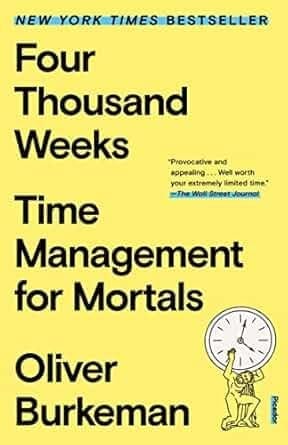
The average human lifespan is absurdly, insultingly brief. Assuming you live to be eighty, you have just over four thousand weeks.
Nobody needs telling there isn’t enough time. We’re obsessed with our lengthening to-do lists, our overfilled inboxes, work-life balance, and the ceaseless battle against distraction; and we’re deluged with advice on becoming more productive and efficient, and “life hacks” to optimize our days. But such techniques often end up making things worse. The sense of anxious hurry grows more intense, and still the most meaningful parts of life seem to lie just beyond the horizon. Still, we rarely make the connection between our daily struggles with time and the ultimate time management problem: the challenge of how best to use our four thousand weeks.
Drawing on the insights of both ancient and contemporary philosophers, psychologists, and spiritual teachers, Oliver Burkeman delivers an entertaining, humorous, practical, and ultimately profound guide to time and time management. Rejecting the futile modern fixation on “getting everything done,” Four Thousand Weeks introduces readers to tools for constructing a meaningful life by embracing finitude, showing how many of the unhelpful ways we’ve come to think about time aren’t inescapable, unchanging truths, but choices we’ve made as individuals and as a society—and that we could do things differently.
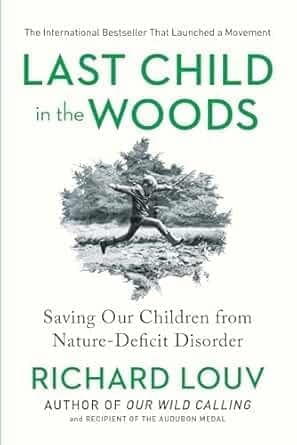
“I like to play indoors better ’cause that’s where all the electrical outlets are,” reports a fourth grader. But it’s not only computers, television, and video games that are keeping kids inside. It’s also their parents’ fears of traffic, strangers, Lyme disease, and West Nile virus; their schools’ emphasis on more and more homework; their structured schedules; and their lack of access to natural areas. Local governments, neighborhood associations, and even organizations devoted to the outdoors are placing legal and regulatory constraints on many wild spaces, sometimes making natural play a crime.
As children’s connections to nature diminish and the social, psychological, and spiritual implications become apparent, new research shows that nature can offer powerful therapy for such maladies as depression, obesity, and attention deficit disorder. Environment-based education dramatically improves standardized test scores and grade-point averages and develops skills in problem solving, critical thinking, and decision making. Anecdotal evidence strongly suggests that childhood experiences in nature stimulate creativity.
In Last Child in the Woods, Louv talks with parents, children, teachers, scientists, religious leaders, child-development researchers, and environmentalists who recognize the threat and offer solutions. Louv shows us an alternative future, one in which parents help their kids experience the natural world more deeply—and find the joy of family connectedness in the process.
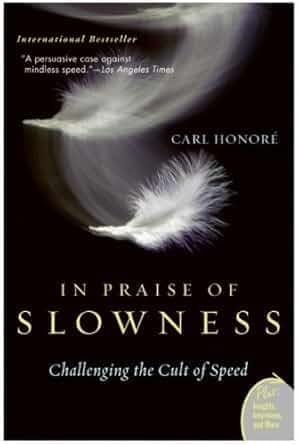
We live in the age of speed. We strain to be more efficient, to cram more into each minute, each hour, each day. Since the Industrial Revolution shifted the world into high gear, the cult of speed has pushed us to a breaking point. Consider these facts: Americans on average spend seventy-two minutes of every day behind the wheel of a car, a typical business executive now loses sixty-eight hours a year to being put on hold, and American adults currently devote on average a mere half hour per week to making love.
Living on the edge of exhaustion, we are constantly reminded by our bodies and minds that the pace of life is spinning out of control. In Praise of Slowness traces the history of our increasingly breathless relationship with time and tackles the consequences of living in this accelerated culture of our own creation. Why are we always in such a rush? What is the cure for time sickness? Is it possible, or even desirable, to slow down? Realizing the price we pay for unrelenting speed, people all over the world are reclaiming their time and slowing down the pace -- and living happier, healthier, and more productive lives as a result. A Slow revolution is taking place.
Here you will find no Luddite calls to overthrow technology and seek a preindustrial utopia. This is a modern revolution, championed by cell-phone using, e-mailing lovers of sanity. The Slow philosophy can be summed up in a single word -- balance. People are discovering energy and efficiency where they may have been least expected -- in slowing down.
In this engaging and entertaining exploration, award-winning journalist and rehabilitated speedaholic Carl Honoré details our perennial love affair with efficiency and speed in a perfect blend of anecdotal reportage, history, and intellectual inquiry. In Praise of Slowness is the first comprehensive look at the worldwide Slow movements making their way into the mainstream -- in offices, factories, neighborhoods, kitchens, hospitals, concert halls, bedrooms, gyms, and schools. Defining a movement that is here to stay, this spirited manifesto will make you completely rethink your relationship with time.
On this website we talk about:
🌱 The CULTIVATE Method to giving your child the education they need to succeed in the real world.
🧪 The Science of Learning & Education that's missing from the school system.
🚫 Deschooling: disconnecting ourselves from the school-shaped models we inherited so we can radically re-think education for our kids.
🛠 Tools & Models to help you create a more meaningful education experience for your child (and enjoy it more)
Join our newsletter for education tips and tricks
Built with systeme.io | Privacy policy | Terms and conditions
Join our FREE Back-to-Homeschool Webinar
🍎 Ready to Reimagine the School Year?
Whether you're brand new or simply craving a better rhythm, you'll walk away with clarity, tools, and fresh inspiration to choose a personalize, child-centered approach that actually fits your family.
As a thank you for signing up, we'll send you some free planning resources RIGHT NOW
(Can't make the date? Don't worry, we'll send you a replay that you can watch in your own time!)